
A lasting treatment option for painful or recurring ingrown toenails
When conservative treatment is no longer providing relief, ingrown toenail surgery may be recommended to remove the problematic section of nail and help reduce recurrence.
At ITTS Clinic, we take the time to explain the procedure, your anaesthetic and comfort options, recovery and aftercare before proceeding.
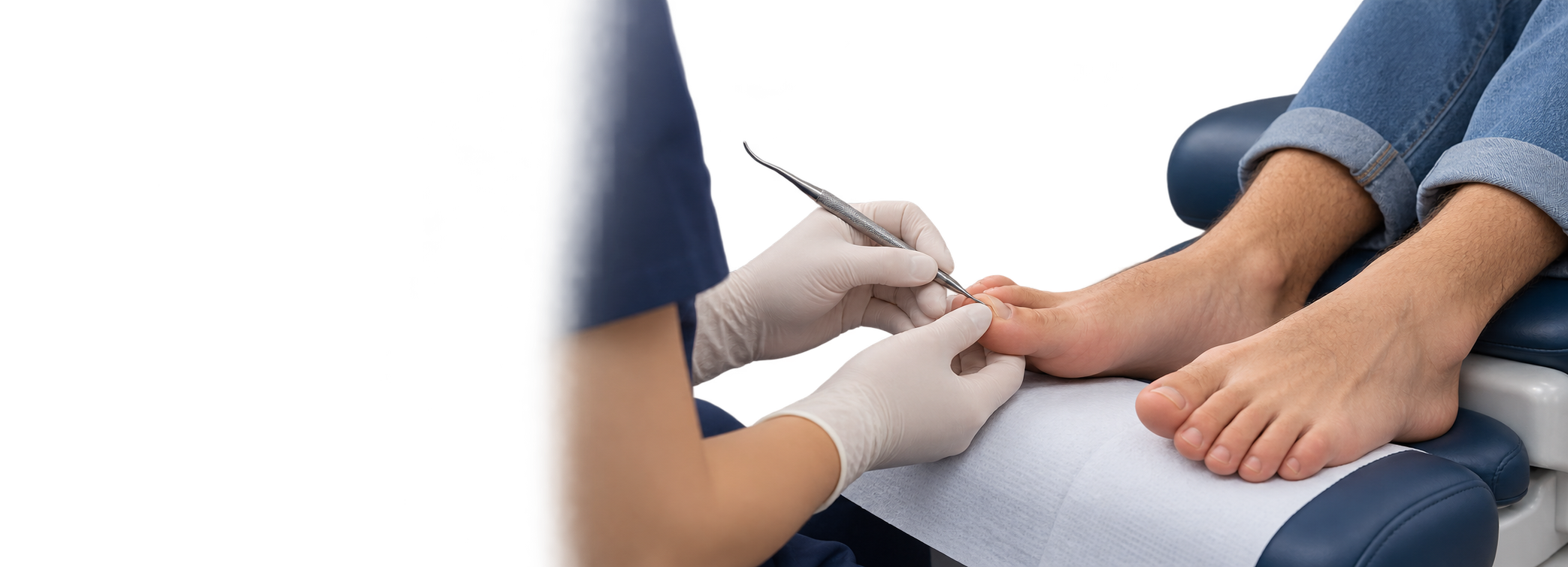
Ingrown Toenail Surgery
When is surgery recommended?
Surgery may be considered when:
Growth spurts

There is ongoing pain or inflammation

Conservative treatments have not provided lasting relief.
Infection or overgrown tissue keeps developing
What does ingrown toenail surgery involve?
Partial Nail Avulsion (PNA)
A Partial Nail Avulsion, commonly called a PNA, is a procedure used to treat recurring or painful ingrown toenails.
Only the problematic edge of the toenail is carefully removed, allowing the healthy portion of the nail to remain in place.
Where appropriate, the nail root on the affected side may also be treated to help reduce the chance of that section of nail growing back and becoming ingrown again.
There are different ways an ingrown toenail can be treated depending on the nail, your symptoms and how much of the nail is affected.
Total Nail Avulsion (TNA)
A Total Nail Avulsion, or TNA, involves removing the entire toenail. This may be considered when the whole nail is significantly affected or when removing only one section of the nail is unlikely to provide the most appropriate outcome.
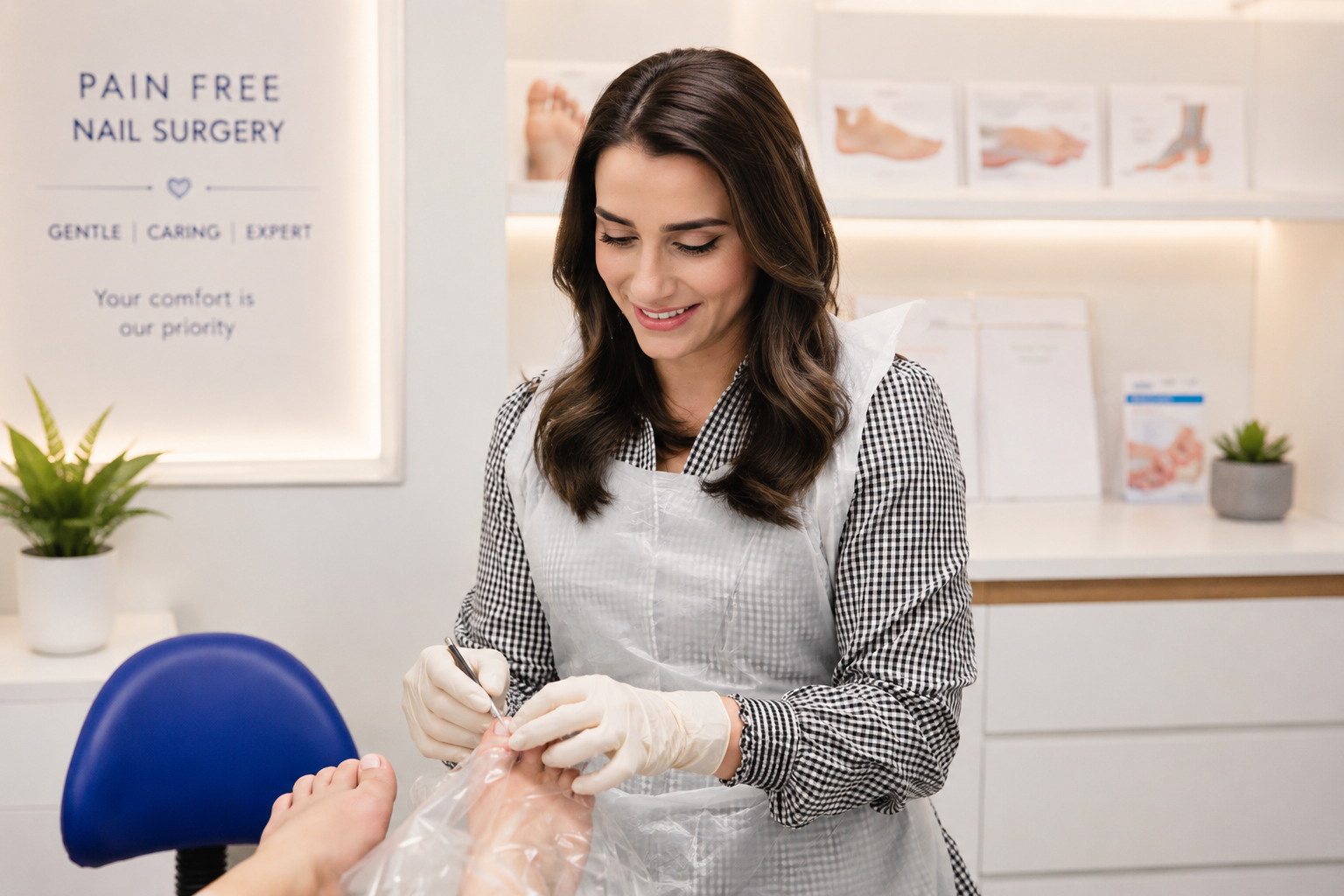
Surgery is not automatically the first option.
We’ll assess your toenail first and discuss the treatment options most appropriate for you.
We’ll explain which approach is most appropriate for your nail before any treatment is performed.
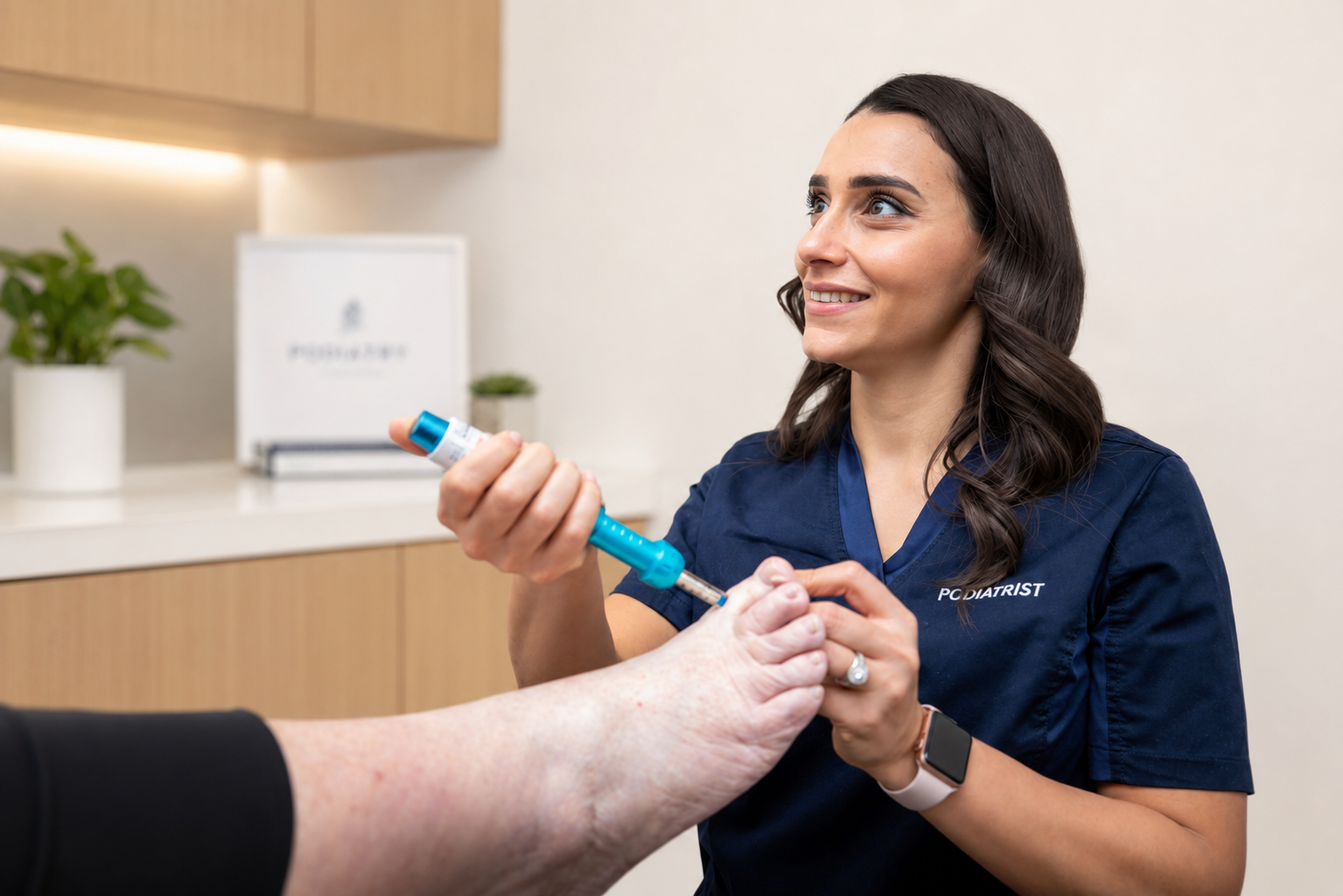
What Happens During Ingrown Toenail Surgery?
Ingrown toenail surgery is performed under local anaesthetic to numb the affected toe.
Once we have confirmed that the toe is adequately numb, the problematic section of nail, or the entire nail where required, is carefully removed.
Where appropriate, the nail root may also be treated to help reduce the likelihood of the problematic section growing back.
A dressing is then applied and you’ll receive clear instructions on caring for your toe at home.
Nervous about your procedure or needles?
We understand that ingrown toenail surgery can feel daunting, particularly for people who are anxious about needles or medical procedures.
Needle-free technology is available for suitable patients. Additional comfort options including happy gas and Penthrox may also be available for suitable patients undergoing selected procedures, with appropriate GP and nursing support.
Comfort options are discussed individually and depend on clinical suitability.
Comfort Options for Ingrown Toenail Surgery

Recovery After Ingrown Toenail Surgery
After your procedure, you'll receive clear instructions about caring for your toe and dressing at home.
Follow-up appointments are arranged as appropriate to monitor healing, answer your questions and support your recovery.
Recovery varies from person to person depending on the procedure performed, general health and individual healing.
Risks of Ingrown Toenail Surgery

As with any procedure, ingrown toenail surgery has potential risks. These may include infection, delayed healing, bleeding, temporary discomfort, changes to the appearance of the nail and recurrence.
Your individual circumstances, expected outcome, treatment alternatives and potential risks will be discussed with you before proceeding.
Frequently Asked Questions
Still have questions? Take a look at the FAQ or reach out anytime.
-
The procedure is performed under local anaesthetic so the toe is numb before treatment begins. We check that you are adequately numb before starting the procedure.
The local anaesthetic itself can be uncomfortable for a short period. For suitable patients, we can discuss additional comfort options including needle-free technology, happy gas or Penthrox. These options depend on the procedure, your medical history and clinical suitability.
-
Usually, no.
For many ingrown toenails, a Partial Nail Avulsion (PNA) is performed. This removes only the problematic side of the nail while leaving the remaining healthy nail in place.
A Total Nail Avulsion (TNA) removes the entire nail and may be recommended when the whole nail is affected or when a partial procedure is not appropriate.
We will assess your nail and explain exactly what we recommend before you decide to proceed.
-
During some procedures, the nail root responsible for producing the problematic section of nail is treated with phenol. The aim is to prevent that section of nail from growing back and becoming ingrown again.
No procedure can guarantee that an ingrown toenail will never recur. We will discuss the expected result and risk of recurrence with you before treatment.
-
The actual nail procedure is relatively short, however your appointment allows additional time for preparation, local anaesthetic, making sure the toe is completely numb, performing the procedure, applying the dressing and explaining your aftercare.
If you are using one of our additional comfort options, your appointment may require additional time.
-
Yes. You can usually walk after the procedure, but we recommend taking it easy for the remainder of the day and limiting unnecessary walking.
Your toe will have a dressing on it, so please bring open-toed or roomy footwear that will comfortably accommodate the dressing without placing pressure on the toe.
-
This depends on which toe has been treated, the type of procedure performed and whether additional comfort medication has been used.
If you are having happy gas, Penthrox or another comfort option, we will explain any specific driving restrictions beforehand. If required, you will need to arrange for someone to drive you home.
If you're unsure when booking, please ask us so we can advise you before procedure day.
-
Your toe will be dressed immediately after the procedure.
You will receive a dressing pack with all required dressings and written instructions explaining when to remove the initial dressing, how to clean and redress the toe and how often this should be done.
Some redness and drainage can occur during the healing process. We will explain what is expected and what signs we would like you to contact us about.
-
Healing varies depending on the procedure performed, whether one or both sides of the nail were treated, your general health and how your toe responds.
It is normal for the area to require ongoing dressing care while it heals, particularly when phenol has been used.
We arrange follow-up appointments to monitor your healing rather than expecting you to determine this on your own.
-
Many patients can return to work or school relatively quickly, but this depends on the procedure and what your day involves.
Someone working at a desk may return sooner than someone whose job requires prolonged standing, walking, safety footwear or physical activity.
For children and teenagers, we can also provide guidance regarding school shoes, PE and sporting activities.
-
We generally recommend avoiding activities that place significant pressure, friction or repeated trauma on the toe during the early stages of healing.
Running, football, soccer, kicking sports, swimming and activities involving tight footwear may need to be temporarily modified.
We will advise you when it is appropriate to return based on how your toe is healing at your follow-up appointments.
-
You will be given specific instructions regarding when the initial dressing can be removed and how to clean the toe.
After the initial dressing period, you will generally be shown how to clean, dry and redress the area at home.
Follow the instructions provided to you rather than leaving a wet dressing on the toe.
-
An infected ingrown toenail does not automatically mean you cannot be treated.
We will assess the toe, the extent of the infection and your general health before recommending the most appropriate management.
In some situations, the underlying ingrown nail itself needs to be addressed rather than repeatedly treating the surrounding infection alone.
-
Please tell us when you book.
We regularly see patients who are nervous about treatment and can discuss ways to make the experience more manageable.
For suitable patients, options may include needle-free technology, happy gas or Penthrox, with appropriate clinical assessment and GP and nursing support where required.
Not every option is suitable for every patient, so this is discussed individually before the procedure.
-
Yes. Surgery can be considered for children and teenagers when it is clinically appropriate, particularly when an ingrown toenail is painful, recurrent or affecting normal activities.
We consider conservative options first where appropriate and take the child's age, anxiety and ability to tolerate treatment into account when planning care.
-
No referral is generally required to book an assessment at ITTS Clinic.
If your toenail is particularly complex or requires treatment beyond what is appropriate within the clinic, we can discuss this with you and arrange referral to a podiatric surgeon or another appropriate healthcare professional where required.
Not Sure If You Need Ingrown Toenail Surgery?
Start with an assessment. Not every painful or infected ingrown toenail requires surgery.
We’ll assess your toenail, discuss your symptoms and treatment goals and explain the ingrown toenail treatment options that may be suitable for you.
ITTS going to be okay.
Servicing Adelaide & Surrounding Suburbs
ITTS Clinic is conveniently located within Total GP Care Norwood and welcomes patients from across Adelaide, including:
Norwood | Kensington | Marryatville | Burnside | Unley | Prospect | Payneham | Campbelltown | Magill | Adelaide CBD | Eastern Suburbs